 CKS
CKS
A long view of light.
Every diamond is a question about time. Ours just answers it differently.
The diamond has been read as proof of permanence for as long as we have bothered to look at it. Atoms locked in lattice. Light bent and broken and returned. The very first stones were carried in pockets of moving earth for hundreds of millions of years before anyone thought to put one on a finger. We inherited the grandeur of that journey, and then, quietly, we inherited its cost.
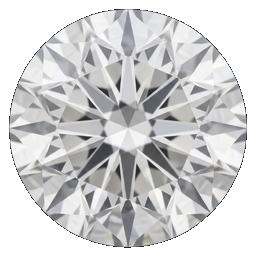
A laboratory diamond is the same diamond. Same atomic arrangement, same crystal habit, same refractive index, same hardness, same fire. The only difference is the speed of the work. Where the earth took a hundred million years, we take a few weeks; where the supply chain took a continent, we take a building. The grammar of the stone is unchanged. The provenance is.

We started LabRocks because we believed two things at once. The first: that the romance of a fine stone is real, not invented. The second: that the inherited price of that romance — paid in scarcity, in extraction, in opaque chains of custody — was no longer the only way to reach it. A diamond grown in a controlled environment is not a compromise. It is the same brilliance, on better terms.
Each piece in the house is made to order. There is no warehouse and no surplus. A customer chooses a setting and a stone, and the bench begins. Six to eight weeks later a small box arrives, and inside it is one diamond, set into one piece of recycled gold, and that piece has never existed before.
Made-to-order is a discipline as much as it is a method. It forces a kind of slowness on us. We resist runs. We resist seasons. We design four pieces, and we keep designing only those four pieces, until they feel right at every carat. A solitaire ring. A pair of solitaire studs. A line bracelet. A solitaire pendant. The vocabulary is small on purpose. The grammar is what we work on.

The setting outlasts the price. A diamond is a forever object in the very simplest sense: kinetic energy will not move it, time will not soften it, fashion will not catch it. We make the metalwork to the same standard. Recycled 18kt gold, eight prongs where four would do, polished by a person who can tell when the polish is right.
What changes is the price. The same 1.00-carat round brilliant that a mined-stone house would price near twelve thousand euros, we will set for four thousand two hundred euros. The work is the same. The wait is the same. The wearer holds the same weight on the same finger. Only the price is quietly different.
A small house can have small opinions. We have a few of those too.
We think a diamond is for keeping, not flipping. We think the stone should live on a body, not in a vault. We think the right size of a stone is the one that disappears into the rest of the wearer and only catches the eye when the light cooperates. We think a piece of fine jewellery should outlast its receipt by a long way.
We also think the question of where a diamond comes from has become a fair one to ask. Lab-grown stones carry their answer in the chemistry of the seed and the temperature of the chamber. They are easy to trace because there is nothing to hide. We hand a customer a stone with the same certificate that the laboratory itself uses for its inventory: an IGI report, a serial number, a date. That is the whole story.

LabRocks is a small atelier. Four pieces, three languages, one laboratory. We will keep it that way for as long as it serves the work. The diamond is older than us and will outlast us; in the meantime we polish its prongs.
— The atelier · MMXXVI